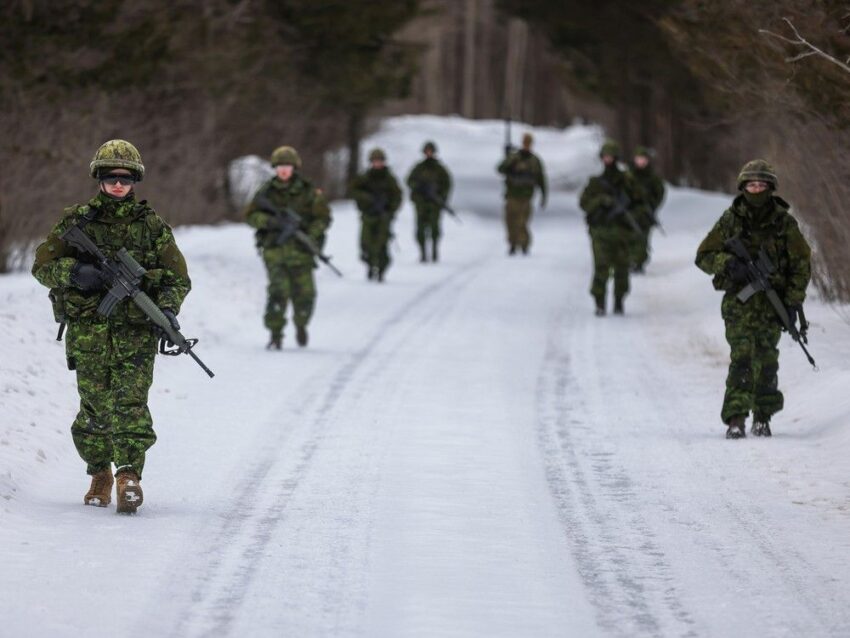
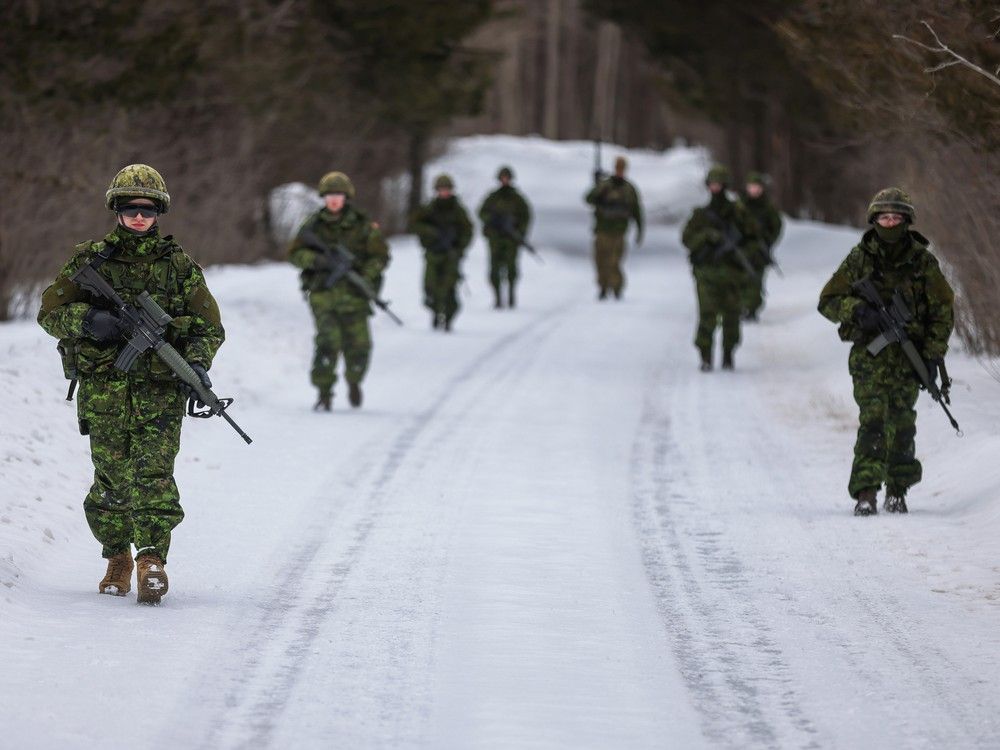
Increasing global uncertainty is motivating Canadians to enlist in the Canadian Armed Forces (CAF), according to federal Minister of National Defence, David McGuinty.
“Applications are up” 13 per cent in the past eight months, McGuinty told
on Tuesday.
That number has been confirmed to the National Post by the Department of National Defence (DND). As of early January 2026, prospective recruit applications for the regular force “have increased by approximately 12.9% compared to the previous fiscal year,” a DND spokesperson said in an email on Wednesday.
The CAF’s plan, known as
commits to modernizing the recruitment process and rebuilding the military to 71,500 regular force members by March 31, 2032. But
, Canada’s regular force was at 65,677 — 5,823 people short of the target.
Applicants must submit eligibility documents to confirm their age, citizenship and education (ACE) as part of the recruitment process, says Kened Sadiku, DND media relations officer. They can train while undergoing administrative intake. But if a recruit “does not meet the required security clearance, right personality, medical or any other aspect of being a suitable CAF member” they
from the CAF.
In 2024-25, the ACE documents of 21,700 were confirmed. That’s up from 2023-24, when 12,269 were confirmed and 2022-23 when 9,865 were confirmed.
Meanwhile, enrolment numbers are increasing in line with the increases in applications. This includes direct enrolments into the regular force as well as transfers from the Cadet Organizations Administration and Training Service, Rangers, and Supplementary Reserve, says Sadiku. For 2024-25, the enrolment number was 6,710. For 2023-24, it was 4,334 and for 2022-23 it was 3,924.
According to Sadiku, Ontario and Quebec are the largest sources of intake into the regular force, followed closely by Alberta. In 2024-25 that meant 2,431, 1,407 and 778 recruits, respectively. There were no recruits from the northern regions of the country.
In McGuinty’s view, the surge of CAF applicants reflects a desire “to make sure that Canada remains a secure and sovereign country.” Since U.S. President Donald Trump’s ramped up attacks on Canada’s economy, while also threatening to annex the country as “the 51st state,” the Liberal government has been pouring tens of billions of dollars into the military.
That includes myriad initiatives such as Ottawa’s new Defence Industrial Strategy, which aims to inject funds and create
in Canada, while diverting spending from the U.S. to its other allies. And a revitalized focus on securing Canada’s north. Members of the Canadian Armed Forces are getting a 20 per cent pay hike, as well improved living conditions at military bases. Then there are the ongoing big-ticket purchases (some in the works since the Stephen Harper government): new submarines, fighter jets and warships.
All these incentives are partly aimed at boosting the sallow level of military recruitment, which has resulted in shortfalls in soldiers and pilots. It’s a story that has dragged on for years. Michel Maisonneuve, a retired Canadian lieutenant-general, who served as assistant deputy chief of the defence staff, has even suggested the CAF’s
ranks be boosted by mandatory service.
Meanwhile, Lieutenant-General Steve Boivin, who heads Canadian Joint Operations Command, told National Post in early 2025 that his boss, General Jennie Carignan, Canada’s chief of defence staff, has taken steps to bolster recruitment. Those efforts include “bringing people in faster, introducing a period of monitoring, then we’re looking at reviewing how we do background checks and security clearances, going digital versus analogue, because we have realized that the young people today in Canada, they want to serve … but they’re not going to wait for very long to get answers.”
These efforts are noted in DND’s “State of the Canadian Armed Forces” where prospective recruits can read all about the process and use the Online Applicant Portal (OAP), which launched in March 2025.
Canadians are all for increased defence spending, which has reached a 30-year high, the National Post has
. Three-quarters of Canadians believe there should be more spending on defence, according to a recent EKOS survey. That’s up from 66 per cent in December 2023.
However, not everyone is on board with Ottawa’s plan. In early February,
Stefanie Beck, a former DND deputy minister warned
that the billions in additional defence spending promised by the Carney government is “nowhere near what we need” and is only serving to “plug in the holes in the wrong way.”
Our website is the place for the latest breaking news, exclusive scoops, longreads and provocative commentary. Please bookmark nationalpost.com and sign up for our daily newsletter, Posted, here.