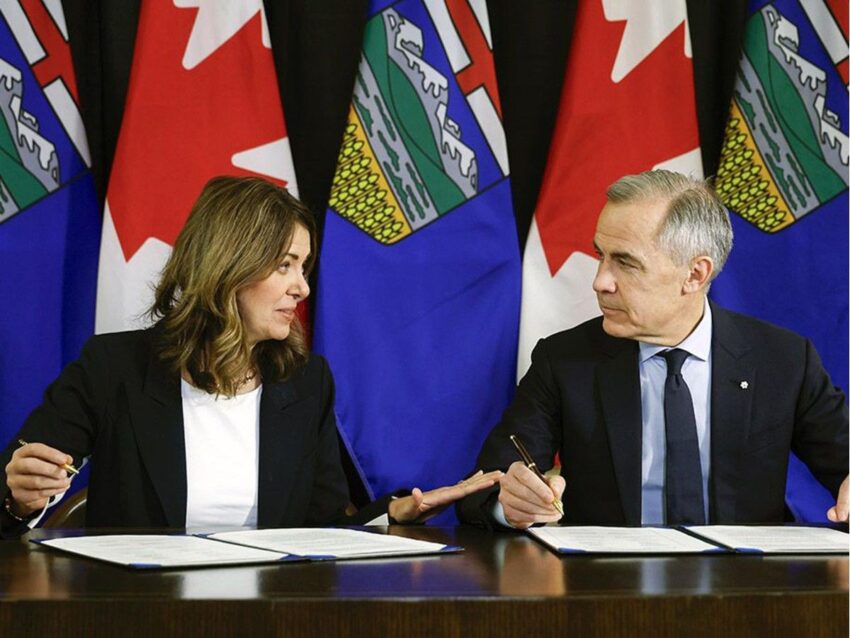
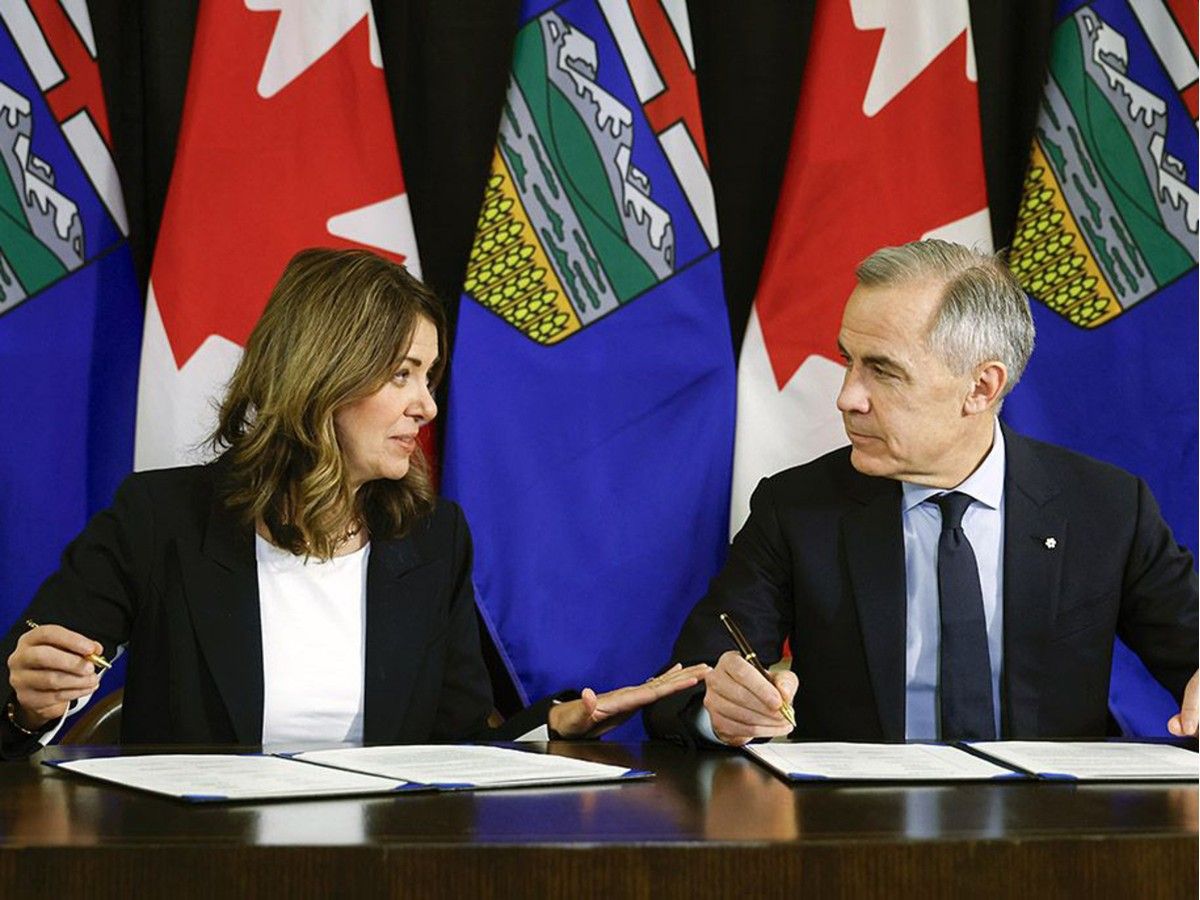
OTTAWA — Alberta and Ottawa have cleared a major hurdle on their way to fulfilling the memorandum of understanding (MOU) on energy signed last fall.
The two jurisdictions announced on Wednesday they’d reached an
agreement-in-principle on methane equivalency
that aims to reduce methane emissions by 75 per cent below 2014 levels by 2035 in Alberta.
The parties agreed to appoint an independent monitor, to be named later, to track methane reductions across Alberta.
Rick Smith, President of the Canadian Climate Institute, called the announcement a “positive step forward” in a statement.
“The final details of the equivalency agreement, and follow-through on the commitment to independent and transparent verification of outcomes, will be critical to determine the agreement’s success,” said Smith.
The methane deal was one of four joint outcomes tied to a deadline of April 1, 2026 in the text of
.
The announcement comes a day after Alberta Premier Smith
told reporters in Houston, Texas
that she didn’t expect the April 1 deadlines to be met.
“We don’t want to delay very long. We know that we need to have market certainty, but that’s the time frame that we’re working towards,” Smith told a Canadian news outlet on Tuesday.
Smith is in Houston this week to attend international energy conference CERAWeek by S&P Global. Federal Energy Minister Tim Hodgson and Nova Scotia Premier Tim Houston have also made the trip down.
Wednesday’s announcement follows
on environmental and impact assessments announced earlier this month, meaning that two of the four items attached to the April 1 deadline have been fulfilled.
The two items remaining are a carbon pricing agreement and a trilateral deal with the oilsands companies involved with the Pathways carbon-capture project. The parties have a week left to keep the MOU on schedule.
The MOU’s next checkpoint, following the April 1 deadlines, will be the expected submission of Alberta’s proposal for a new West Coast Pipeline to the Major Projects Office by July 1.
A run on oil prices triggered by the start of hostilities in Iran in late February appears to spurred renewed private-sector interest in the pipeline.
The CEO of Enbridge, the Calgary-based pipeline giant behind the stalled Northern Gateway Project, said this week that he was
open to the company’s involvement
in building the new pipeline. This about-face comes after Enbridge spent months publicly distancing itself from the pipeline.
Smith said this week that she was confident there will be interest from foreign companies and sovereign wealth funds in investing in the potential pipeline.
West Texas Intermediate oil was trading at US$90 a barrel as of Wednesday afternoon. Western Canada Select was trading at US$76 a barrel.
National Post
rmohamed@postmedia.com
Our website is the place for the latest breaking news, exclusive scoops, longreads and provocative commentary. Please bookmark nationalpost.com and sign up for our daily newsletter, Posted, here.